

John 4:1-6 Berean Standard Bible. Images created using NightCafe Studio.
Introduction:
Jesus and the Samaritan Woman
1When Jesus realized that the Pharisees were aware He was gaining and baptizing more disciples than John 2(although it was not Jesus who baptized, but His disciples), 3He left Judea and returned to Galilee.
4Now He had to pass through Samaria. 5So He came to a town of Samaria called Sychar, near the plot of ground that Jacob had given to his son Joseph. 6Since Jacob’s well was there, Jesus, weary from His journey, sat down by the well. It was about the sixth hour.
Commentary Source: Enduring Word Bible Commentary
The distance from Judea from Galilee is approximately seventy miles. The travel time typically took 2.5 or 3 days walking. The Jews typically would travel around Samaria. Professor Jeffrey P. García maps and explains Jesus’ pilgrimage routes.
The white dotted line shows Jesus’ route in John 4.

Location Matters: Shechem & Sychar
Why did Jesus go through Samaria when most Jews would travel the extra distance to go around? The green and red lines represent the pilgrim routes that circumvented Samaria.
Purpose of Going through Samaria
David Guzik comments:
https://enduringword.com/bible-commentary/john-4/
“Jesus needed to go through Samaria. The need wasn’t because of travel arrangements or practical necessities, but because there were people there who needed to hear Him.”
Importance of Location
David lists the important events that happened in Shechem and the relation of the Jews to the Samaritans in his commentary cited above. In summary, God reveals Himself to Abraham and Jacob. Both patriarchs built altars to God and worshiped here. Joshua makes his covenant (Joshua 24) about he and his house serving the Lord.
Later in the Assyrian and Babylonian captivities, the people who were left behind settled in this region. They intermarried with others and set up their own temple to God on Mt. Gerizim. When the Jews returned from exile they later burned down this temple. This history comes up in the woman’s discussion with Jesus about true worship.
Do we avoid others that we see as being culturally different? Are we open to sharing the Gospel truth with anyone whom God places in our path? Or do we avoid certain people and places because we disagree or dislike their culture or way(s) of life? Are our hearts open to sharing God’s love and Good News to anyone, anywhere?
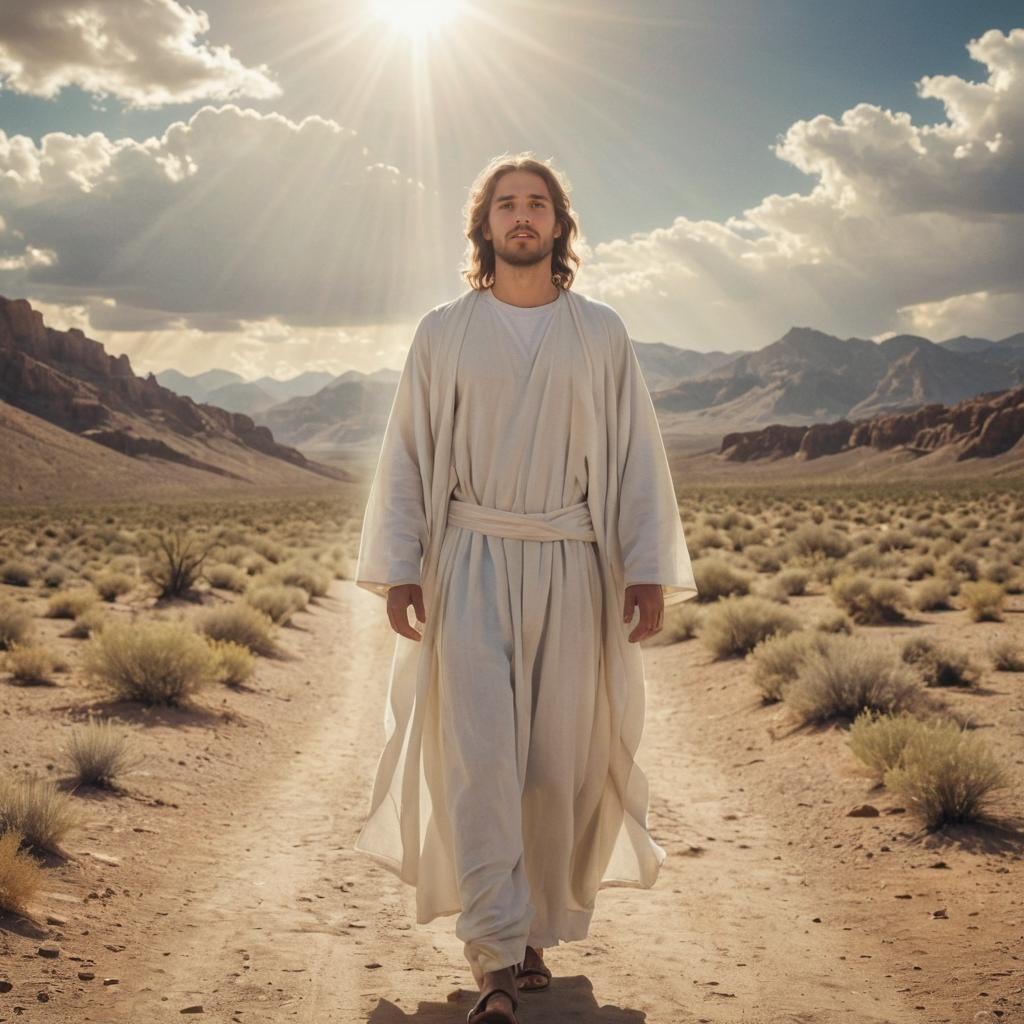
Jesus, the Son of God, Immanuel walks toward Samaria for a divine appointment with an outcast woman.
Jesus: Fully Human and Divine
Beautiful mystery that encourages us to worship and seek Him more!
Two Terms: Key concepts highlighted.
Theanthropos
“At no time did Jesus ever cease to be God. Although He was made fully human, there was never a point when He abrogated His divine nature (see Luke 6:5, 8). It is equally true that, after becoming incarnate, the Son has never ceased to be human. As the apostle Paul wrote, “For there is one God, and there is one mediator between God and men, the man Christ Jesus” (1 Timothy 2:5, emphasis added). Jesus is not half-human and half-divine. Rather, He is Theanthropos, the God-man. The Lord Jesus Christ is one eternally divine Person who will forever possess two distinct yet inseparable natures: one divine and one human.”
Source: https://www.gotquestions.org/Jesus-God-man.html
Hypostatic Union
Explanation:
“In AD 451, the Council of Chalcedon articulated this belief, affirming that Jesus has two distinct natures—divine and human—united in one person without confusion, change, division, or separation. This union remains an unfathomable mystery, stretching the limits of human comprehension.
The New Testament presents Jesus as a historical figure who was born in Bethlehem (Matthew 2:1) and raised in Nazareth (Matthew 2:23). He experienced the full range of human existence: physical limitations, emotions, and temptations. Jesus became hungry (Matthew 21:18), thirsty (John 4:7), fatigued (John 4:6), and sorrowful (Mark 14:34; John 11:35). He also showed compassion to those in need (Matthew 9:36) and experienced the pain of betrayal (Luke 22:1–23). In His humanity, Jesus is a perfect representation of what it means to be human (Romans 5:18–19).
While Jesus is fully human, He is also fully divine. He claimed divine authority (Matthew 28:18), forgave sins (Mark 2:5–12), performed miracles (John 2:1–11), and accepted worship (Matthew 21:9). The New Testament describes Him as the eternal Word of God who became flesh (John 1:1, 14) and gives Him the title “Immanuel,” which means “God with us” (Matthew 1:23). The statement “I and the Father are one” (John 10:30) affirms Jesus’ divine nature, which includes omnipotence (Hebrews 1:1–4), omniscience (John 2:25), and perfection (2 Corinthians 5:21).”
Source: https://www.gotquestions.org/fully-God-fully-man.html

The Conversation Begins with a request:
John 4:7-13
7When a Samaritan woman came to draw water, Jesus said to her, “Give Me a drink.” 8(His disciples had gone into the town to buy food.)
9“You are a Jew,” said the woman. “How can You ask for a drink from me, a Samaritan woman?” (For Jews do not associate with Samaritans.)
10Jesus answered, “If you knew the gift of God and who is asking you for a drink, you would have asked Him, and He would have given you living water.”
11“Sir,” the woman replied, “You have nothing to draw with and the well is deep. Where then will You get this living water? 12Are You greater than our father Jacob, who gave us this well and drank from it himself, as did his sons and his livestock?”
13Jesus said to her, “Everyone who drinks this water will be thirsty again. 14But whoever drinks the water I give him will never thirst. Indeed, the water I give him will become in him a fount of water springing up to eternal life.”
15The woman said to Him, “Sir, give me this water so that I will not get thirsty and have to keep coming here to draw water.”
Jesus asks for a drink. This is ironic in that He is the Living Water! Notice how Jesus engages with the woman who is at the well around noon. He asks for a drink of water and mentions the “gift of God.”
Significance of Living Water: Cultural understanding of water and springs
He would have given you living water: In ancient times they called spring water living water because it seemed alive as it bubbled up from the ground. At first glance, it might seem that Jesus told this woman about a nearby active spring. But Jesus made a play on words with the phrase “living water,” because He meant the spiritual water that quenches spiritual thirst and gives life.

Jesus meets us where we are at in our journeys of life. He is Truth, Grace, and Eternal Water that flows into and through our lives!
Jesus wasn’t like the “religious” leaders and rabbis of His age
How Jews viewed Samaritans:
“The deadly hatred that subsisted between these two nations is known to all. The Jews cursed them, and believed them to be accursed. Their most merciful wish to the Samaritans was, that they might have no part in the resurrection; or, in other words, that they might be annihilated.” (Clarke)
David adds:
“For many reasons, this woman would have been despised by most of the religious leaders in the days of Jesus. She was a woman, a Samaritan, and a woman of questionable reputation. Yet, in the interview with Nicodemus John showed us, Jesus has something to say to the religious establishment. In the meeting with the Samaritan woman at the well John showed us, Jesus has something to say to those despised by the religious establishment.”

Jesus Meets Her Greatest Need
John 4:16-26
16Jesus told her, “Go, call your husband and come back.”
17“I have no husband,” the woman replied.
Jesus said to her, “You are correct to say that you have no husband. 18In fact, you have had five husbands, and the man you now have is not your husband. You have spoken truthfully.”
19“Sir,” the woman said, “I see that You are a prophet. 20Our fathers worshiped on this mountain, but you Jews say that the place where one must worship is in Jerusalem.”
21“Believe Me, woman,” Jesus replied, “a time is coming when you will worship the Father neither on this mountain nor in Jerusalem. 22You worship what you do not know; we worship what we do know, for salvation is from the Jews. 23But a time is coming and has now come when the true worshipers will worship the Father in spirit and in truth, for the Father is seeking such as these to worship Him. 24God is Spirit, and His worshipers must worship Him in spirit and in truth.”
25The woman said, “I know that Messiah” (called Christ) “is coming. When He comes, He will explain everything to us.”
26Jesus answered, “I who speak to you am He.”
The famous English preacher Charles Spurgeon comments:
“Christ has different doors for entering into different people’s souls. Into some, he enters by the understanding; into many, by the affections. To some, he comes by the way of fear; to another, by that of hope; and to this woman he came by way of her conscience.”

True Worship
David in Enduring Word Commentary explains true worship:
“God is Spirit, and those who worship Him must worship in spirit and truth: With these words Jesus described the basis for true worship: it is not found in places and trappings, but in spirit and in truth.
i. To worship in spirit means you are concerned with spiritual realities, not so much with places or outward sacrifices, cleansings, and trappings.
ii. To worship in truth means you worship according to the whole counsel of God’s word, especially in light of the New Testament revelation. It also means that you come to God in truth, not in pretense or a mere display of spirituality.”
Jesus confronts her about her need for redemption then explains how a person truly worships God. As a Samaritan she viewed worship as a place:
“You worship what you do not know: The Samaritans believed that Moses commissioned an altar on Mount Gerazim, the mountain of blessing – this was their justification of their system of worship on that mountain. But like all faith that tries to combine elements of different religions, they worship what they do not know. . .Jesus pointed her to a time when worship would no longer be focused on places (neither Jerusalem nor Mount Gerazim). The greater work of Jesus would bring a greater, more spiritual worship.“

Living Water: Worship the Messiah
Jesus first identifies Himself as the Messiah to a Samaritan woman! He does this for several reasons. First, He fulfills scriptural prophecy. Second, He establishes that His Gospel of Good News is for everyone not just the Jews. Third, He reveals the Gospel power of transformation (next article post). For a concise summary:
Living water comes through knowing Jesus: a personal relationship that transforms a person!
 Words of Grace & Hope
Wow, this opened my eyes to a truth I didn’t understand before. The woman questioned how Jesus could give her water because the well was deep and he didn’t have anything to draw with. We doubt sometimes because we don’t see evidence instead of trusting in the unseen power of God. Thanks!
LikeLiked by 1 person