

Resources to Assist Your Healing Journey
Disclaimer:
I am not a doctor or licensed therapist. I share resources and insights for informational purposes. The primary objective is to provide understanding, learning, and awareness concerning trauma for those interested in learning/personal growth. No information provided here can replace professional evaluation, diagnosis, or treatment.
Video resources are from Tim Fletcher a Canadian pastor and addiction counselor. For more information on him and his approach to healing:
https://www.timfletcher.ca/about-tim-fletcher
I share these videos which are available without cost on Youtube. My desire is for you to use these resources in your journey and to be better equipped to assist others you encounter.
How Courage Helps Us to Heal and Move Forward
Video Resource #2: Tools and Tips
Commentary
I’ve written about trauma, attachment styles, and other emotional/relational topics. My desire is to provide effective resources that can assist you in healing. This author subscribes to the integrated approach to counseling. Got Questions sums up this approach in this article:
“An integrationist approach recognizes that there are inherent biases in scientific fields. Data and facts can be derived by using the scientific method, but the interpretation of that data and those facts is often subjective. Psychology also touches on many things that cannot be determined by the scientific method, such as life purpose or the definition of health. Thus, integrated Christian counseling does not simply accept the teachings and findings of the modern psychological field; rather, it critically evaluates them through the lens of a biblical worldview.”
https://www.gotquestions.org/integrated-Christian-counseling.html
This author firmly believes that God is active and desiring that we seek out resources to work through our past traumas and negative experiences in order to become more understanding, compassionate, and discerning in our relationships with others.

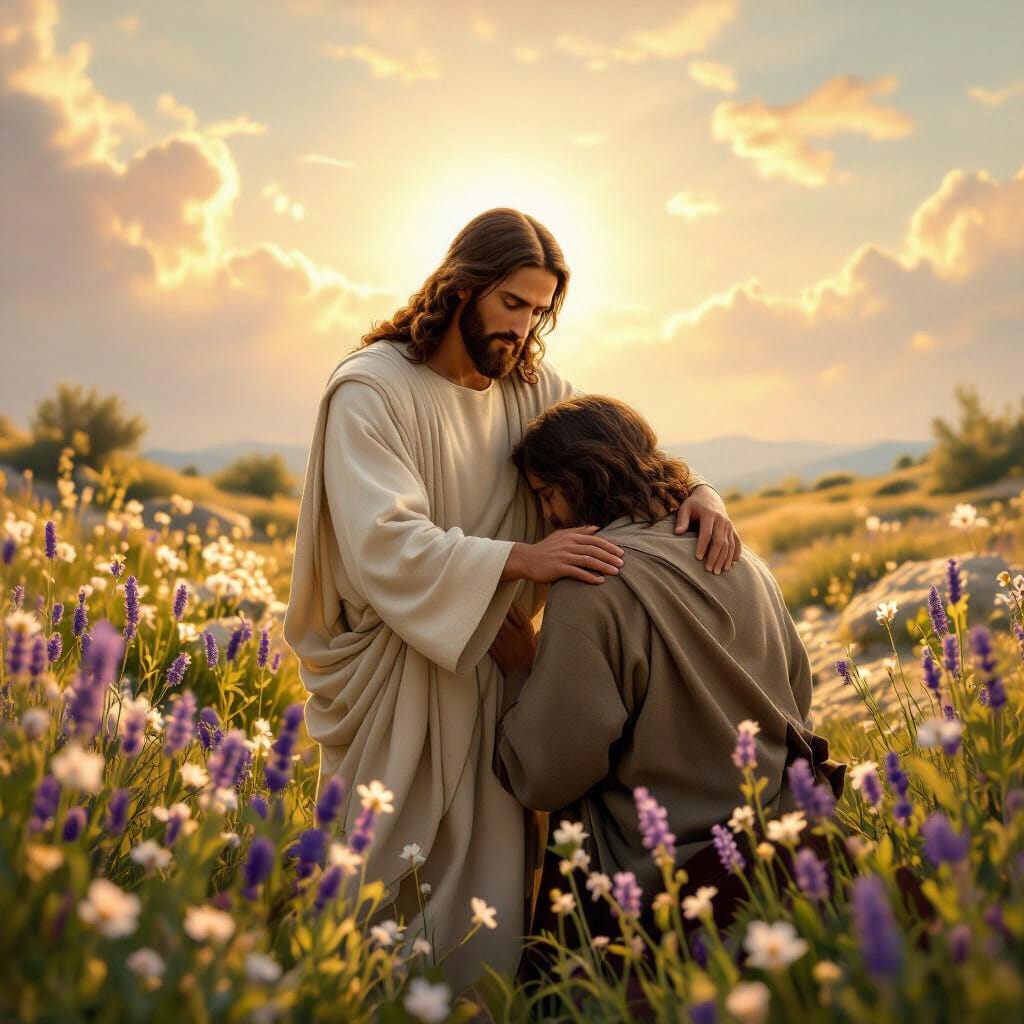
A place of healing and restoration–A.I. image by author
Humility and Courage in Healing
Choosing to seek Christ and grow involves recognizing our situation as fallen humans. This is radically different from shame or false guilt. The Bible explains this concept as Godly sorrow. What is godly sorrow? It is sorrow that leads us to repent and trust in Christ. It’s realizing that we have “sinned” and offended God and/or others by our actions in life.
https://www.gotquestions.org/godly-sorrow.html
Guilt is different. Guilt without grace doesn’t necessarily lead to repentance. Guilt becomes a viewpoint on how we view ourselves, others, or the world around us that causes us to embrace shame. Consider this quote:
Shame, on the other hand, is worldly sorrow. Shame says there is something wrong with us. Sometimes we heap it on ourselves; other times it’s put on us by others. Shame is unlike guilt in that it doesn’t lead us to repentance. Instead of drawing us closer to God, it causes us to walk away from him. Shame says, “You’re not good enough.”
Source: https://faithgateway.com/blogs/christian-books/difference-between-guilt-shame
Shame leads to broken connections with ourselves, God, and others. This process began in the Garden of Eden when Adam and Eve are hiding from God’s presence. Since that moment in history, we as humans tend to hide from God and His presence. That’s the power of sin and brokenness.
Hiding, shame, and guilt extended through our relationships with others as well. It leads us to lack confidence, hesitate to be appropriately vulnerable/open with others in community, and harshly judge ourselves/others. Addressing the root of shame, guilt, and social anxiety frees us to better love and serve others!

He makes time to reflect and prepare for a coming day.
Courage: Choosing to Move forward
Tim explains and defines courage for you in the first video clip. Courage isn’t the absence of fear, but a determination to move forward using available resources. The key concept to this process is seeking assistance, developing, and using resources to move forward. The tendency for fearful avoidant (disorganized attachment style) and traumatized people is to withdraw or allow “triggers” to guide thinking and responses.
Courage emerges when a person makes the choice to respond to triggers and situations using available resources. This isn’t easy or painless, but it’s vital to healing and changing negative thought patters/trigger responses. A mental health professional is a great resource! Christian or secular counselors can assist you in identifying areas of your life that are causing you to feel shame and process through them as you grow and move forward.

Guilt and shame lead us to feel alone, disconnected, and broken. It’s a negative feedback scenario that needs healing and restoration.
Understanding Guilt and Shame
Tim explains the difference between guilt and shame:
Truth, Grace, and Hope
These three lead to healing. Truth illuminates the dark areas that need Christ’s redeeming touch. Grace is God’s Nature in desiring to redeem and restore. Hope is our response and anticipation of God working in and through our lives!
Paul’s prayer for the Ephesians-My prayer for you in your healing journey!
Ephesians 1:15-23 Berean Standard Bible
Spiritual Wisdom
(1 Corinthians 2:6–16)
15For this reason, ever since I heard about your faith in the Lord Jesus and your love for all the saints, 16I have not stopped giving thanks for you, remembering you in my prayers, 17that the God of our Lord Jesus Christ, the glorious Father, may give you a spirit of wisdom and revelation in your knowledge of Him.
18I ask that the eyes of your heart may be enlightened, so that you may know the hope of His calling, the riches of His glorious inheritance in the saints, 19and the surpassing greatness of His power to us who believe. These are in accordance with the working of His mighty strength, 20which He exerted in Christ when He raised Him from the dead and seated Him at His right hand in the heavenly realms, 21far above all rule and authority, power and dominion, and every name that is named, not only in the present age but also in the one to come.
22And God put everything under His feet and made Him head over everything for the church, 23which is His body, the fullness of Him who fills all in all.
 Words of Grace & Hope
This is a very encouraging article—thank you for writing it. The distinction you draw between shame and godly sorrow is especially clarifying, and the emphasis on courage with faith offers real hope to anyone wrestling with trauma. It’s a strong reminder that seeking help and leaning into grace are courageous, faith-filled steps toward healing.
LikeLiked by 2 people