

Trauma Identification & Healing
Featured Image: image captured by blog author on recent evening
Previous Post
Purpose & Helpful Images
Source:
https://www.instagram.com/dr.lalitaa
For visual learners, Dr. Lalitaa’s Instagram posts assist in explaining the “whys” and solutions for your emotional healing journey. I share these images and personal insights to encourage you to press ahead in your spiritual growth and healing. All images are property of Dr. Lalitaa and are accessible on her Instagram page as cited previously. I’m also including links to valuable websites.
What does trauma look like?

If you recognize these “symptoms” in your own life or in the life of others, then I encourage you to seek out appropriate physical and emotional treatment for a licensed medical professional.
Better Help is an affordable resource that will pair you with an online therapist if you’re unable to obtain local counseling/therapy. I highly recommend working with a LCSW or MSW (licensed clinical social worker/master’s social worker) who has experience and credentials in trauma. Trauma doesn’t heal itself. Trauma recovery requires work and consistent self-reflection. This is not a lone wolf, “heal thyself” process!
I worked with an excellent LCSW through Better Help until I was able to partner with a local provider. This enabled me to continue healing and moving forward. This process requires courage, honesty, and accountability while working through difficult emotions. When we recognize that our thought patterns, trauma, etc. are causing issues, then it’s our responsibility to seek healing and do the hard work!
We gain courage and practice maturity in seeking healing! It’s not an easy journey with quick fixes.

Image of light ray captured as I walked and reflected this past week.
Medical Causes
I recommend a thorough physical exam to make sure that your physical health isn’t one of the root problems. Vitamin deficiencies, nutritional issues, and hormonal imbalances create emotional difficulties. A physical exam with appropriate blood work will provide insights.
Helpful webpage with examples and explanations:
https://www.amymyersmd.com/blogs/articles/nutrient-deficiencies-mood
for Dr. Myer’s credentials:
https://www.amymyersmd.com/pages/my-story

Photo by Zac Durant on Unsplash
Recognizing Triggers
What are triggers? Thais Gibson provides this excellent explanation:
Triggers are your mind’s way of signaling unhealed wounds, urging you to address and process them rather than suppressing them. If you can begin to identify triggers in a relationship, you can work toward staying present. Consider these questions:
Are there patterns in when or where these reactions happen?
What were you feeling right before you were triggered?
What specific words, actions, or situations seem to spark these emotions?
I’ve found Personal Development School (PDS) to be a good investment in healing. Weekly webinars and group online resources are included in the monthly subscription. PDS is a community of coaches and members committed to healing and growing together.
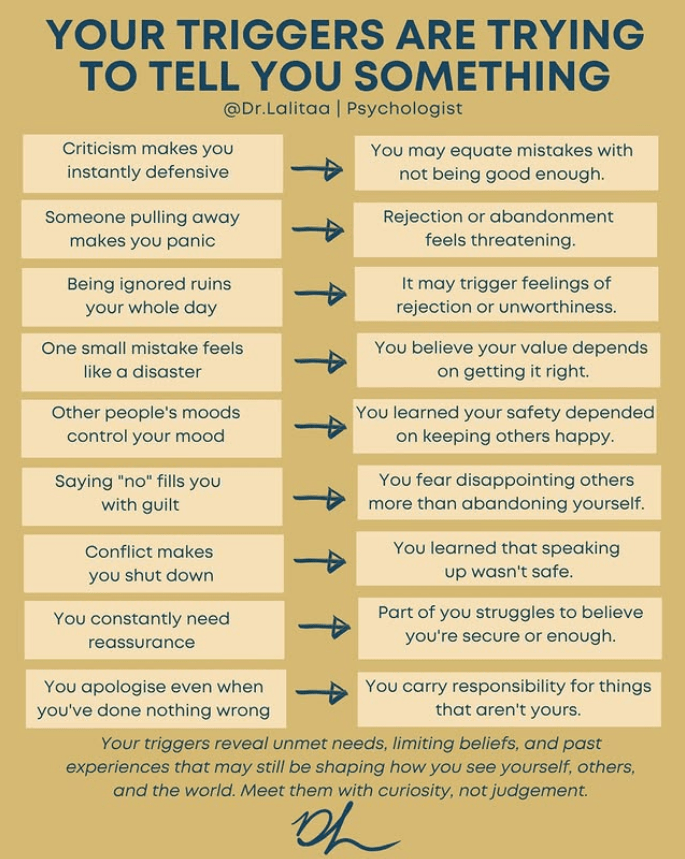
Triggers’ Messages to You–are you listening and reflecting?
Regulating Your Nervous System
Self-regulation is one of the challenges of daily for trauma survivors. Triggers emerging are the first sign of emotional dysregulation. This is why that trauma survivors often experience rapid mood shifts, sudden panic, or furious anger. I consider staying regulated is my greatest challenge as someone who has survived multiple traumatic events. Stress (physical or emotional) leads to dysregulation as well.

Neurodivergent
As a former educator, I’ve worked with hundreds of unique and gifted individuals. Recently, I’ve become aware that adults are discovering that they are on the spectrum. As testing and new research becomes available, men and women are receiving diagnosis of being on autism spectrum and it explains some of their difficulties in life.
Verywell explains this concept in a respectful manner:
Quotes are from this article:
What does neurodivergent mean?
“there are a variety of ways that people’s brains process information, function, and present behaviorally. Rather than thinking there is something wrong or problematic when some people don’t operate similarly to others, neurodiversity embraces all differences.
The concept of neurodiversity recognizes that both brain function and behavioral traits are simply indicators of how diverse the human population is.
Neurodiversity frames these differences as neutral rather than “bad” or problematic, emphasizing that they can also bring strengths and should be recognized and valued.”
The Impact
“While neurodivergence is common, many people do not realize they are neurodivergent until they reach adulthood. This can create challenges as people adapt to differences in how they think and process information, but it can also be helpful.
For many adults, finding out they have ADHD, autism, or another form of neurodivergence often helps explain things they didn’t understand about themselves previously.
In all areas of life, having a diagnosis can bring you a deeper sense of understanding about why you function the way you do and how to best work with that.”
Understanding how our minds work gives us insight into our inner thoughts and how we process our interactions and life!

Photo by Zac Durant on Unsplash
Neuro-divergent and trauma: fit together
Source:
https://existentialpsychiatry.com/neurodivergence-and-trauma
“Neurodivergent traits and trauma responses can look similar on the surface. This is why so many adults reach their 20s, 30s, 40s, or later before someone considers the possibility of neurodivergence. . . A useful way to think of it: Neurodivergence is the wiring. Trauma is the injury. Both impact how you move through relationships, emotions, and daily life.”
A neurodivergent person will face difficulties that neuro-typical individuals don’t understand. I included this section in this article for the person who hasn’t considered or explored this possibility in your life.

