

Consider the Prophets proclaiming God’s truth to stubborn, unrepentant people. Jeremiah goes into exile with his people. His warnings were ignored and he was punished for proclaiming God’s truth. Do you ever feel the same way?
An Uncomfortable Truth & His Kingdom
Why Jesus teaches using parables: Matthew 13:10-16
The Purpose of Jesus’ Parables
(Isaiah 6:1–13; Mark 4:10–12; Luke 8:9–10)
10Then the disciples came to Jesus and asked, “Why do You speak to the people in parables?”
11He replied, “The knowledge of the mysteries of the kingdom of heaven has been given to you, but not to them. 12Whoever has will be given more, and he will have an abundance. Whoever does not have, even what he has will be taken away from him. 13This is why I speak to them in parables:
‘Though seeing, they do not see;
though hearing, they do not hear or understand.’
14In them the prophecy of Isaiah is fulfilled:
‘You will be ever hearing but never understanding;
you will be ever seeing but never perceiving.
15For this people’s heart has grown callous;
they hardly hear with their ears,
and they have closed their eyes.
Otherwise they might see with their eyes,
hear with their ears,
understand with their hearts,
and turn, and I would heal them.’
16But blessed are your eyes because they see, and your ears because they hear. 17For truly I tell you, many prophets and righteous men longed to see what you see but did not see it, and to hear what you hear but did not hear it.
Jesus quotes Isaiah 6. He clearly explains that people will not respond. God already knows the outcome. Jesus doesn’t force people to believe or follow Him. The Gospel testimony is that many choose not to believe.
Ever tried to be an encouraging or spiritual content creator? Most posts are ignored or passed over. Articles consumed by complete strangers who couldn’t be bothered to comment, ask questions, or share. Social media rewards the big influencers and blatant narcissists. It’s an unending, soul-crushing effort. Yet, it’s my calling to endure and press ahead.
Roy T. Bennett encourages me:
“Blessed is the spirit that walks through valleys of sorrow, yet still breathes forth gentleness, mercy, and quiet strength.”
“Offer kindness to others, not as a measure of their deeds nor in hope of recompense, but as the faithful reflection of the virtues within you.”

Photo by Delfina Cocciardi on Unsplash
The Bread of Life
Offense that leads to rejection
John 6:47-60
When Jesus proclaims that He is the “bread of life” consider how the people respond:
47Truly, truly, I tell you, he who believes has eternal life. 48I am the bread of life. 49Your fathers ate the manna in the wilderness, yet they died. 50This is the bread that comes down from heaven, so that anyone may eat of it and not die. 51I am the living bread that came down from heaven. If anyone eats of this bread, he will live forever. And this bread, which I will give for the life of the world, is My flesh.”
52At this, the Jews began to argue among themselves, “How can this man give us His flesh to eat?”
53So Jesus said to them, “Truly, truly, I tell you, unless you eat the flesh and drink the blood of the Son of Man, you have no life in you. 54Whoever eats My flesh and drinks My blood has eternal life, and I will raise him up at the last day. 55For My flesh is real food, and My blood is real drink.
56Whoever eats My flesh and drinks My blood remains in Me, and I in him. 57Just as the living Father sent Me and I live because of the Father, so also the one who feeds on Me will live because of Me. 58This is the bread that came down from heaven. Unlike your fathers, who ate the manna and died, the one who eats this bread will live forever.”
Many Disciples Turn Back
(Matthew 8:18–22; Luke 9:57–62; Luke 14:25–33)
59Jesus said this while teaching in the synagogue in Capernaum. 60On hearing it, many of His disciples said, “This is a difficult teaching. Who can accept it?”
Consider the context of this passage: follows the feeding of the thousands and Jesus walking on water during the storm. People walked away when Jesus confronts their desire to make Him a political king. The people wanted a warrior king and provider not a savior so they walked away.
Jesus is explaining His mission and purpose in relation to the manna theme of Old Testament. Simply explained, God provided manna to His people in the desert to sustain them on their journey to the Promised Land. Jesus wasn’t about establishing an earthly kingdom–consider that Satan attempts to tempt Him with all the kingdoms of the world.

Photo by Bruce Barrow on Unsplash
The Way is His Way
What are you seeking in your journey? The people in the Gospels didn’t want Jesus: they wanted a political, warrior King to set society right and remove the despised Romans. Do we fall into this same mindset? Seeking a political, economic, or other fixes for the issues and inequalities of our society? This is how many so called “Christians” are walking away from the Way of Christ. Seeking short term political or economic wins instead of God’s Kingdom and ways.
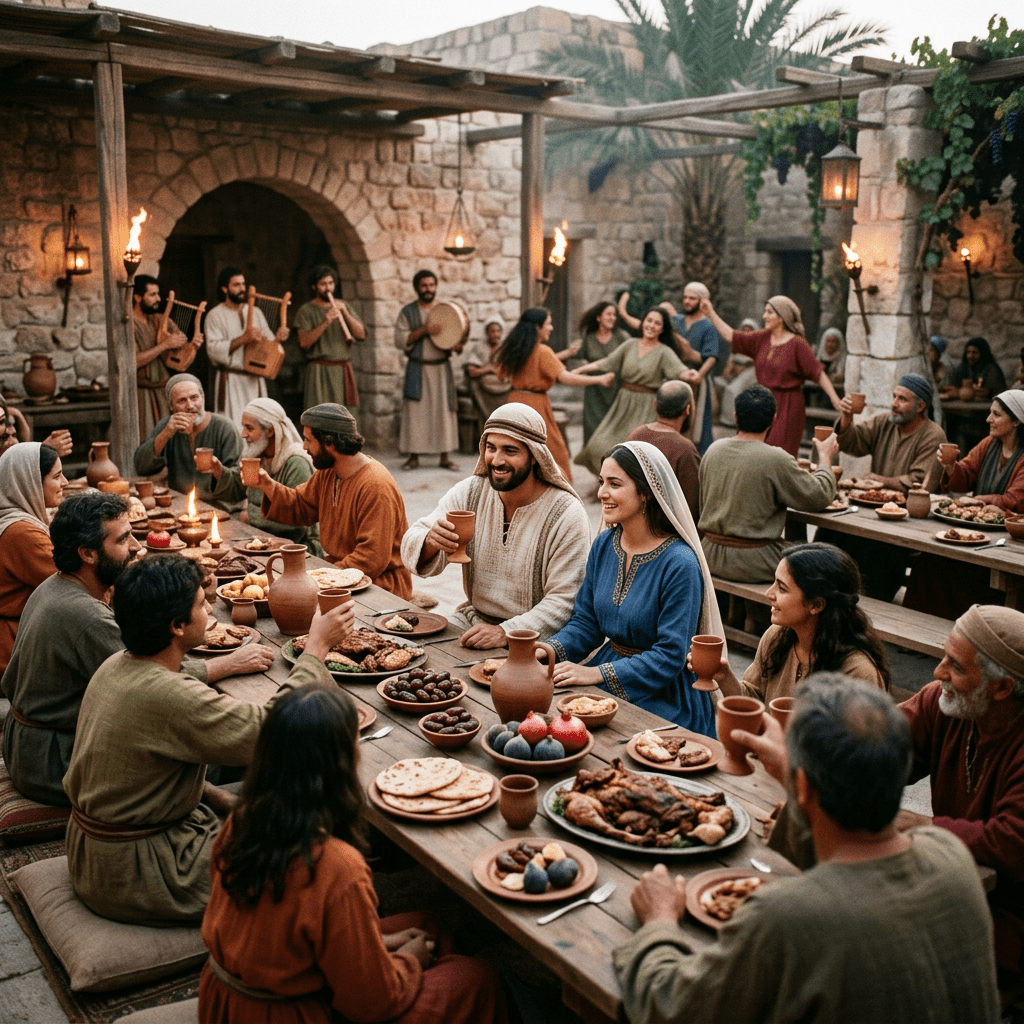
Parable of the Wedding Feast
Check out this video for an indepth Greek and cultural explanation of this famous parable:
Summary
https://www.gotquestions.org/parable-wedding-feast.html
“To summarize the point of the Parable of the Wedding Feast, God sent His Son into the world, and the very people who should have celebrated His coming rejected Him, bringing judgment upon themselves. As a result, the kingdom of heaven was opened up to anyone who will set aside his own righteousness and by faith accept the righteousness God provides in Christ. Those who spurn the gift of salvation and cling instead to their own “good” works will spend eternity in hell.
The self-righteous Pharisees who heard this parable did not miss Jesus’ point. In the very next verse, “the Pharisees went out and laid plans to trap him in his words” (Matthew 22:15). The Parable of the Wedding Feast is also a warning to us, to make sure we are relying on God’s provision of salvation, not on our own good works or religious service.”


parables weed out those who only want the benefits and not the substance.
LikeLike